



More information


The Fertő–Hanság National Park Directorate is responsible for more than 70,000 hectares of protected areas in north-western Hungary. These areas include the National Park itself, three Landscape Protection Areas and several Nature Conservation Areas, as well as a number of Natura 2000 sites. The Directorate also coordinates the maintenance and management of the HUFH30004 Szigetköz Natura 2000 site. At the eastern edge of this area, in the Danube’s main channel, lie the Erebe Islands, which are among the region’s most valuable and spectacular habitats. In addition, the area forms part of the Pannonhalmi Landscape Protection Area, established in 1992.
Across this mosaic of habitats, gravel bars, flat shoal-like gravel terraces, and accreted islands with high banks alternate with forest habitats and flowing-water environments. This diversity supports a rich biota that includes hundreds of plant and animal species, a selection of which we have the opportunity to present.
Life on the Gravel Bars
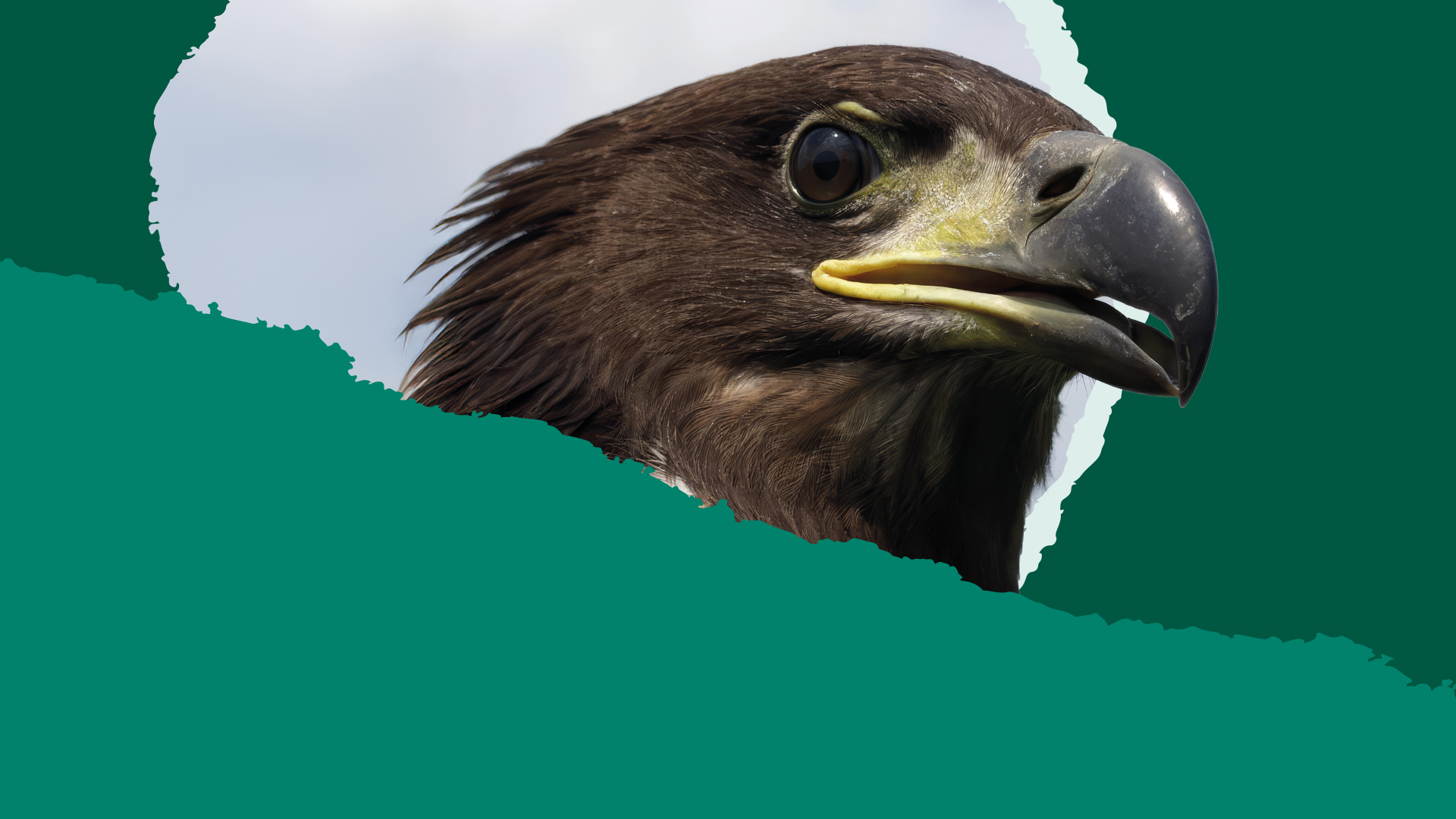
The Danube has been rolling its gravel load along its bed for millennia, washing it away in some places while building gravel bars and islands in others – processes that are vividly observable at the Erebe Islands. On the flat gravel bars along the northern and eastern parts of the islands lives the little ringed plover (Charadrius dubius), which simply lays its eggs among the pebbles; the eggs blend completely with their surroundings, so the precocial chicks hatch safely and, following their parents, can immediately peck at aquatic invertebrates in the river’s gently flowing shoreline zone. The common sandpiper (Actitis hypoleucos) also nests and feeds here, while dozens – at times hundreds – of great egrets (Ardea alba), little egrets (Egretta garzetta), black-crowned night herons (Nycticorax nycticorax) and grey herons (Ardea cinerea) gather along the edges of the bars to feed. In winter, these habitats provide excellent resting sites for overwintering white-tailed eagles (Haliaeetus albicilla) arriving from their far-northern Scandinavian breeding grounds.
Naturally regenerating forests within the river channel
Gravel bars are transient features that very quickly develop into islands. Both the shoal-dominated aquatic habitats and those that – accelerated by river regulation – have transformed from bars into islands are significant from a conservation perspective, because the spontaneously initiated floodplain succession that stabilizes the bars creates a range of habitats. From a conservation standpoint, some of the most valuable are the softwood riparian gallery forests that have formed, and continue to form, on the transformed bars, with white willow (Salix alba), white poplar (Populus alba), black poplar (Populus nigra) and crack willow (Salix fragilis). In the understorey there are mud-sedge stands, tall floodplain-herb communities and willow shrub thickets. Taken together, these provide excellent cover, nesting and resting sites for dozens of organisms. The penduline tit (Remiz pendulinus) often builds its hanging nest on branches that overhang the water, while cavities in older trees shelter the blue tit (Cyanistes caeruleus). The great cormorant (Phalacrocorax carbo) also nests here, and these smaller woodland patches are suitable for the little egret (Egretta garzetta) and the black-crowned night heron (Nycticorax nycticorax) as well. Along the shoreline, banded demoiselles (Calopteryx splendens) and other black-legged damselflies flit by, while the Eurasian otter (Lutra lutra) finds good resting spots to consume its fish prey. The common kingfisher (Alcedo atthis) likewise waits on branches that jut out over the water, ready to dart at a passing fish.
Forest habitats on the accreted islands
As a result of centuries of river engineering on the Danube, the oldest members of the Erebe Islands are the accreted islands with high banks that formed where former gravel bars once lay (Nagy-Erebe Island, Macska Island, Kis-Erebe Island). In the eroding high banks of these islands, kingfishers (Alcedo atthis) and sand martins (Riparia riparia) excavate nesting burrows, and here and there the lodges of the European beaver (Castor fiber) can also be observed.
Until 2000, these islands were managed under planned forestry, when they were designated a forest reserve (Decree No. 13/2000. (VI. 26.) of the Ministry of Environment), and since then they have been a strictly protected natural area. Practically no management activities may take place; the forest’s natural processes must be allowed to prevail, and only research activities may be conducted.
In parts of the area there are abandoned, strongly transforming hybrid poplar stands (Populus × canadensis and related hybrids) that provide abundant deadwood for wildlife, with each such tree functioning as a habitat in its own right. Longhorn beetles (Cerambycidae) and other wood-boring beetles breed within the same trees, whose cavities host, among others, blue tit (Cyanistes caeruleus), great tit (Parus major), chaffinch (Fringilla coelebs) and black woodpecker (Dryocopus martius). In the natural willow–poplar gallery forests, the nesting of chiffchaff (Phylloscopus collybita), the rare eastern olivaceous warbler (Iduna pallida) and river warbler (Locustella fluviatilis) should also be noted.
These forests also host the nests of the strictly protected white-tailed eagle (Haliaeetus albicilla). The likewise strictly protected black stork (Ciconia nigra) has returned as a breeding species to these woods. Among mammals, the stoat (Mustela erminea) is also present; beneath the trees, wild boar (Sus scrofa), red deer (Cervus elaphus) and roe deer (Capreolus capreolus) find cover, and the golden jackal (Canis aureus) appears from time to time, albeit not regularly.
Numerous bat species live on the islands. In tree cavities, for example, alongside Daubenton’s bat (Myotis daubentonii), the strictly protected pond bat (Myotis dasycneme) also finds suitable conditions.
Within the forests, two large, old black poplars (Populus nigra) represent a special genetic value, since with the expansion of hybrid poplars (Populus × canadensis) purely black poplar individuals occur naturally only very rarely.
An interesting phenomenon is the gradual spread of snowdrop (Galanthus nivalis) in recent years on the eastern half of Nagy-Erebe Island and in the western part of Macska Island.